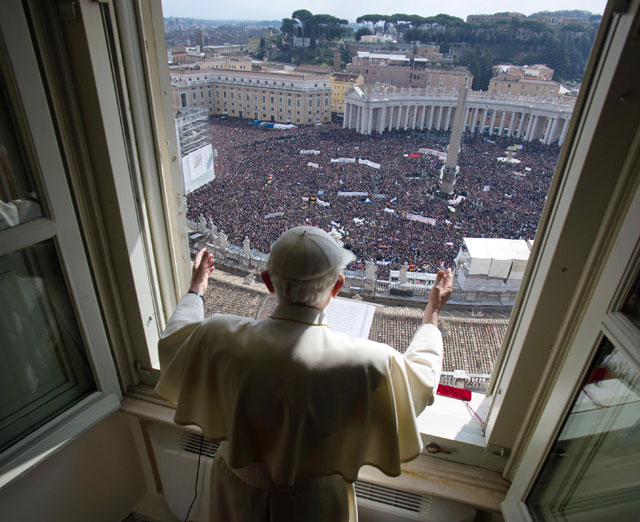
There are lots of ancient cultures, religions, myths, and legends in our world today that were past from our ancestors. In many books, like Dan Brown's book and other books about Percy Jackson, authors use these allusions and myths to propel a storyline. If you read these books, you must critically think about what is true and what is false about the ancient stories that are mixed into the modern day novels.
When reading, the different books, I found that the stories are interesting. Like the Egyptian gods. Did the cultures really see these gods or were they made up to keep people from living in fear? Also, was the bible just made up or was it written by people 400 years after Jesus's death? I am a big fan of history channel's documentary on culture and it makes me really question the ideas of our history. There are some extremely false and unscientific concepts on the documentaries, like lizard men using brain control. Other than that, there are somethings like gods being extraterrestrials or that people saw the gods because of the ritual use of psychedelics. These weird ideas can be interesting and thought provoking.
"I find the most interesting villians do the right things for the wrong reason or the wrong things for the right reason. I love the grey area between right and wrong" (Brown). Dan Brown is a very interetesting fictional novelist. He uses the past and art to drive his plot in the story. Here is an interview of Dan on NPR that I heard on the radio a year ago. He describes his new book as well as how he writes such great best sellers. Dan Brown Interview This interview intruged me right away. I thought it was interesting that even a great American novelist doesn't have a certain way to write a best seller. Once, I took a song writing class online that was taught by Pat Pattison. Pat had a certain way to write songs: to think of ideas, make words that make sense and rhyme, make a structure to the piece, and finally write it all out. He had a procedure of writing a song but Dan Brown says he does not have that kind of process. Instead, Brown writes in a free form with some ideas, actions, and history. Also, Dan Brown has an interesting way of creating Villains. In the last two Robert Langdon books, there has been an assassin or killer that works for an ancient cult. In the book Inferno, it seems that Dan makes an evil scientist that tries to decrease the over populated world. This villain seems to be doing things fora a good cause but doing it in a bad way, like chemical diseases to kill off a population. I think this use of a villain is interesting, it reminds me of Dr. Doofenshmirtz from Phineas and Ferb because his actions are meant to be for the bad but sometimes end up helping the community. This use of a villain that works for good but does bad makes for a round character and more of an interesting conflict.
Dan Brown's use of the ancient history and mythology makes the new book interesting to me as well. In the book Angles & Demons, Dan writes about the Vatican City and Rome with the concept of the Illuminati when in the new book, Inferno, Dan writes about one of my favorite topics, Divine Comedy. I think when books or other media use allusions throughout the book, it makes the text a lot more amazing. When I was a kid I enjoyed reading nonfiction books about the mythology of the world. When I was in middle school, I listened to heavier bands. Now I listen to indie rock, but then my favorite band was Alesana. The band used many allusions. Off their second album, "On Frail Wings of Vanity and Wax" the artists used direct allusion to Icarus. Also on the album there were allusions to Paris from the Trojan War, Nero, Alchemy, and Sirens. In their latest album, called: "A Place Where The Sun Is Silent" they wrote a short epic poem based on Dante's experience through the underworld. They used this story to make an album where each song would represent another event/chapter in the book, or each ring of hell. Though I have grown a little out of my teen angst stage, I still find the allusions in Brown's books interesting.
When I first heard this interview in the car while driving past Culvers, the thing that stuck in my head was the fact that Dan Brown travels to the places he writes about so he can understand the scenes his books take place in. Also, he asks questions that propel his story's historical attributes. This really made me want to explore the churches and cities myself, learning more history so I could write songs or poems that refer to ancient mythology.
-What story from history or mythology interests you?
In the book, Angels & Demons, the author seems to put you right in the middle of Rome. He describes the beauty and ancient walls of the Vatican and makes you feel just like Robert while he travels to this new city.
One way that makes you feel like you are in Rome is the use of imagery throughout the book. Dan Brown explains the breath taking views of Rome as if he were Rick Steves giving a tour of Europe. In the text it says, "Rome from the air is a labyrinth-an indecipherable maze of ancient road ways winding around buildings, fountains, and crumbling ruins...His eyes found the crumbling ruins of the Roman Coliseum. The Coliseum, Langdon had always thought, was one of history's greatest ironies. Now a dignified symbol for the rise of human culture and civilization, the stadium had been built to host centuries of barbaric events..." (Brown, 100). I found that the descriptions of the surroundings made me understand the book better. The culture is important to Rome's history and Dan makes sure you are educated about the topic, to make the book a learning experience as well as a great read. I think it is interesting how Brown puts culture and history into each of his books, which makes me enjoy them.
Another way Dan makes you feel like you are in the city is he interrupts lots of his sentences with short phrases in Italian to make you see and understand the culture. Dan Brown also used this tactic in the book The Da Vinci Code, where he intertwined some French phrases and English. In the text it says, "'...the Illuminati members referred to their secret arist as il maestro ignoto-the unknown
master'" (Brown, 238). The use of Italian makes me feel as if I am visiting the country as well as show's Brown's writing technique that combines cultures.
Reading this book, makes me want to travel to many more places. I have been to Australia, France, and England, but I have never been to Italy. I would love to hitch hike across Europe, sleep in a crumby motel and see the world. Also, this makes me want to learn several languages, like Italian, French, and Spanish. I think the use of culture and history makes for an amazing book that makes people want to explore.
Here is a video of Rick Steves' travel around Europe. In this segment, you can see the Vatican and gives you a good understanding of the city and how it looks. I had no idea that the Swiss Guards wore such interesting clothes!
-What places would you like to visit if you ever got the chance?
Fahrenheit 451 overall was a very engaging, thrilling story. It all starts out when we meet a peculiar man named Guy Montag. Now in the beginning of the book, I saw Montag as very mysterious, but not exactly in a good way. He seemed pretty timid and a bit boring. But now I see that was because of his own secret of the books he was hiding. He goes on to meet a neighbor tat just moved in, Clarisse. I think Clarisse encourages him very much in a forward direction towards being his individual self. They become good friends, but Montag hears that Clarisse is now dead and I think the main reason that Montag does continue in his revelation to bring back books is because he wants to carry out the legacy of Clarisse. She was such a genuinely intelligent and mysterious person. After all of this we soon learn that Montag has been hiding books in his home for quite a while now and brings yet another one home with him after yet another fire he starts in a harmless woman's house. He is visited by Captain Beatty, his theoretical boss down at the fire station and Beatty is very keen on hinting to Montag that he knows about the books. After Beatty leaves he shows his secret stash to Mildred, his wife, and she freaks out. he is not pleased with them, being her simple minded self. She just does not want to think about anything that is not in sync with what she normally thinks about.
This brings us to the Part 2 of the book. This is where it all starts to get really interesting. Mildred and Montag start out this part of the book by arguing over the books. Millie is much more interested in the fact of watching T.V. or her "family" than anything to do with Montag sand his books. She thinks he's completely insane. Just when Montag starts to lose hope, he remembers an old English Professor by the name of Faber. Montag arrives at Faber's house after a brief call and they discuss books. They come up with a plan to make copies of books and put them in all the firemen's homes so that nobody can trust them and they may be forced to bring books back just for the pure sake of it. Faber gives Montag an ear piece that he has made so that they can communicate back and forth. Like a walkie talkie for your ear. When Montag comes home, Millie and two of her friends are there. Montag goes crazy for split second and tries to make them understand how important books are while Faber is screaming in his ear not to read to them. Montag does though, read to them that is. They turn Montag in without his knowledge and Montag leaves his home to go to the forestation to turn in only one book to Beatty, thinking everything will be okay and the suspicion will go away. Only that's not exactly what happens. They have to leave the forestation to go start a fire in someones house when they suddenly pull up to Montag's home. This was not expected, obviously, by Montag.
That ends Part 2 and with every end there is a beginning and this beginning happens to be the thrill seeking Part 3. It starts with Montag being beaten to shreds with the words of Beatty. Beatty will not stop insulting him for how stupid he is to have not seen all of the signs. He then forces Montag to burn his own house down with him in which Montag does not take very calmly. Well to the point where Monag actually kills Beatty. Whoops. He burns him alive with a flamethrower when Beatty tries to arrest him. He knocks the other firemen out and makes a run for it, well he tries ,but the Hound gets to him first, slicing a chunk of his leg up, but Montag throws the flamethrower at him as well, killing also, the Hound. Montag travels the distance to Faber's house and finds that they are transporting another Hound to come and try to find him. Faber tells Montag to travel to an old printer's home in St. Louis and Montag tells Faber to remove his scent from Faber's house so the Hound does not reach him. It works and when the Hound reaches Faber's house he turns around. montage changes out of his scented clothes and is carries downstream by a river. When he stops he find a group of unusual people, all with the same motives as Faber. They become friends quickly, learning that they are much of the same. They also watch the chase for Montag on television, eyeing that they have captured "Montag", the only problem is that it's not truly Montag. The story ends when they see jets overlooking the city and exploding the city into bits with bombs. Montag and his friends move towards the city afterwards to try to rebuild it into what they would want.